


Table of Contents
- Introduction: The Million-Dollar Gap Between a Perfect Sample and a Disastrous Bulk Order
- Mistake #1: Ignoring the Nuances of Fit and Inconsistent Size Grading
- Mistake #2: Treating the Tech Pack as a Casual Guideline, Not a Legal Document
- Mistake #3: Skipping Critical Fabric Testing for Shrinkage and Colorfastness
- Mistake #4: Underestimating the Complexity of Print and Embellishment Techniques
- Mistake #5: Rushing the Pre-Production (PP) Sample Approval Process
- Conclusion: Turning Production Challenges into a Competitive Advantage
Introduction: The Million-Dollar Gap Between a Perfect Sample and a Disastrous Bulk Order
Ever held a perfect sample in your hands? The fabric feels just right, the fit is exactly what you envisioned, and the print is flawless. It feels like you’re holding a winning lottery ticket. You give your manufacturer the green light, wire the deposit for a 1,000-piece order, and start planning your launch. Then, six weeks later, the bulk order arrives. The hoodies that were supposed to be a relaxed, oversized fit are now comically long in the sleeves and tight in the chest. The vibrant graphic on your tees looks faded and cracked after a single wash. Suddenly, that winning lottery ticket feels more like a million-dollar liability.
This isn’t just a bad dream; it’s a reality for countless streetwear brands. The jump from a single perfect sample to thousands of consistent, high-quality units is where many promising brands stumble. It’s a minefield of technical challenges that can lead to catastrophic financial losses and damage your brand’s reputation before it even gets off the ground. The problem isn’t a lack of vision; it’s a lack of understanding of the technical processes that turn a great idea into a great product at scale. This article breaks down the five most common—and costly—mistakes brands make in fit, printing, and washing when scaling to bulk production, and how to avoid them by thinking like a seasoned production pro.

Mistake #1: Ignoring the Nuances of Fit and Inconsistent Size Grading
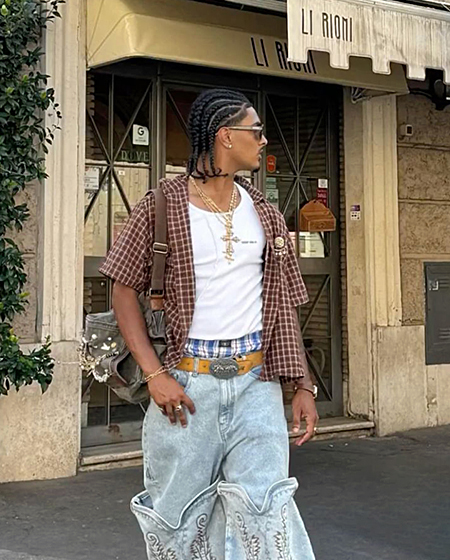
Failing to establish precise fit specifications and consistent size grading rules from the very beginning is a primary cause of production failure. Many brands assume a good medium-sized sample will automatically scale correctly, leading to distorted proportions in other sizes, high customer return rates, and ultimately, wasted inventory and lost profits.
Let’s get real for a second. You’ve probably spent weeks, if not months, perfecting the fit of your signature oversized hoodie on a medium-sized sample. It drapes perfectly, the shoulders have that perfect drop, and the length is just right. You approve it. But what happens when that pattern is graded up to an XL or down to an XS? Too often, factories apply a generic, linear grade rule, simply making everything bigger or smaller by a set amount. The result? Your XL becomes a shapeless tent, and your XS is suddenly a slim-fit tee. This is one of the fastest ways to disappoint customers and rack up returns.
A classic scenario I’ve seen unfold is a brand that nailed its boxy-fit tee in a size Large. The sample was perfect. But when the bulk order arrived, the 2XL tees were not only wider but also significantly longer, throwing off the entire silhouette. The problem wasn’t the factory’s sewing quality; it was a flawed grading rule that didn’t respect the original design intent. For unique streetwear silhouettes, you can’t just scale everything by 2 inches per size. The relationship between chest width, body length, and sleeve length is a delicate balance. A professional approach requires creating specific grade rules for each style. This means defining how much the chest grows versus how much the length increases for each size jump to maintain that signature look.
This is where partnering with experienced streetwear manufacturers becomes a game-changer. They don’t just rely on a single fit model. They often test graded sizes (like an S, M, and XL) on actual fit models to ensure the proportions hold up across the range. They understand that a 1 cm difference in the armhole of an oversized tee can completely change how it hangs. They work with you to translate your fit vision into a concrete set of measurements and tolerances for every single size, ensuring the hoodie your XL customer receives has the same design integrity as the medium you fell in love with.
The key takeaway here is simple: don’t assume your factory knows what you want. Spell it out. Provide a detailed size chart with measurements for every size, and specify the grade increments you expect between sizes. If you’re doing an oversized fit, make sure your grading rules reflect that. A 2-inch increase in chest width might need only a 1-inch increase in body length to maintain the boxy look. This level of detail is what separates a successful bulk order from a warehouse full of returns.

Mistake #2: Treating the Tech Pack as a Casual Guideline, Not a Legal Document
An incomplete, vague, or inaccurate tech pack is the single most common source of miscommunication and costly errors in apparel production. Brands that fail to provide a detailed, comprehensive tech pack are essentially asking manufacturers to guess, leading to incorrect samples, production delays, and final products that don’t match their vision.
Think of your tech pack as the architectural blueprint for your garment. You wouldn’t ask a construction company to build a house with a rough sketch on a napkin, yet many brands approach factories with the apparel equivalent. A common mistake is providing a tech pack with missing points of measurement (POMs), no specified tolerances (the acceptable +/- range for a measurement), or vague instructions like “use a high-quality zipper.” What does “high-quality” mean? YKK? A specific gauge? A particular finish? Without these details, you leave the decision up to the factory, and their choice might not align with your quality standards or budget.
I once worked with a brand that was frustrated because their samples kept coming back with inconsistent stitch work. Their tech pack simply said, “durable stitching.” For their factory, that meant a standard lockstitch. But the brand envisioned a coverstitch for a more athletic, durable look on the seams. That small detail, which was missing from the tech pack, caused two rounds of incorrect samples and a four-week delay. A proper tech pack would have specified the exact stitch type (e.g., 5-thread coverstitch), the stitches per inch (SPI), and the thread type and color. It leaves no room for interpretation.
A truly professional streetwear manufacturer will often push back on an incomplete tech pack, and that’s a good sign. It shows they care about getting it right and want to avoid wasting time and resources. A great streetwear manufacturer views the tech pack as a contract. It’s the single source of truth that they use to build your product. It should include everything: detailed flat sketches with callouts for every seam and detail, a complete bill of materials (BOM) listing every fabric and trim, a full point of measurement (POM) chart with tolerances for every size, construction details for every seam, and clear instructions for labeling and packing. This level of detail protects both you and the manufacturer, ensuring everyone is aligned before a single yard of fabric is cut.
Here’s a quick checklist of what a production-ready tech pack should include:
| Tech Pack Element | Why It Matters |
| Flat Sketches (Front, Back, Detail Views) | Shows the design intent visually, including all seams, pockets, and hardware. |
| Bill of Materials (BOM) | Lists every fabric, trim, label, and tag with specific descriptions and supplier info. |
| Point of Measurement (POM) Chart | Defines exact measurements for every size, with tolerances (e.g., +/- 0.5 inch). |
| Construction Details | Specifies stitch types, seam allowances, and finishing techniques for every part of the garment. |
| Colorways and Pantone Codes | Ensures color consistency across all materials and trims. |
| Label and Packing Instructions | Details the placement of care labels, hang tags, and how garments should be folded and packed. |
Mistake #3: Skipping Critical Fabric Testing for Shrinkage and Colorfastness
Assuming that the fabric used for your sample will perform identically in bulk production without conducting standardized shrinkage and colorfastness tests is a massive gamble. This oversight often leads to garments that shrink or deform after the first wash, and colors that bleed or fade, resulting in widespread customer complaints and irreversible brand damage.
Here’s a horror story that’s all too common: a brand launches a line of premium, 100% cotton fleece hoodies. The samples were perfect—soft, heavyweight, and luxurious. The first batch of customers loved them. Then, the reviews started pouring in. After one wash, the hoodies had shrunk a full size, and the sleeves were two inches shorter. The brand was forced to issue refunds and recalls, wiping out their profit margin and credibility. The cause? They never performed a bulk fabric shrinkage test. The fabric lot used for production had a 7% shrinkage rate, while the sample fabric was closer to 3%.
This isn’t an isolated incident. Fabric performance can vary significantly from one dye lot to another. A responsible production process involves testing the actual bulk fabric before it’s cut. The industry standard for shrinkage is typically between 3-5%, but you need to establish an acceptable percentage for your brand and your specific product. A simple wash test, like the AATCC 135/150 standard, can save you from a product recall. This involves washing and drying a measured swatch of the bulk fabric to see exactly how much it shrinks. If the shrinkage is higher than your allowance, you have two choices: reject the fabric or adjust your patterns to account for the shrinkage. Ignoring it is not an option.
Colorfastness is the other side of this coin. You might have a killer design with a deep black hoodie and a crisp white print. But if the black dye bleeds onto the white print in the wash, you have a defective product. Colorfastness tests for washing (to check for bleeding), rubbing (to check for dye transfer on contact), and light (to check for fading) are non-negotiable, especially for garments with contrasting colors or bold prints. A professional manufacturer will insist on these tests and provide you with the lab reports, which are graded on a scale of 1 to 5. For most applications, you should be looking for a grade of 4 or higher. Settling for less is a direct compromise on quality.
The bottom line is this: never cut bulk fabric without testing it first. It’s a small investment of time and money that can save you from a catastrophic failure. Ask your manufacturer for shrinkage and colorfastness test reports on the bulk fabric lot before you give the green light to start cutting. If they can’t provide them, that’s a red flag.

Mistake #4: Underestimating the Complexity of Print and Embellishment Techniques
Many brands treat printing as an afterthought, assuming any print shop can replicate their design. However, failing to understand the technical limitations and requirements of different methods like screen printing or DTG (Direct-to-Garment) for bulk production often results in poor durability, inconsistent colors, and a final look that cheapens the garment.
Let’s talk about screen printing, the workhorse of streetwear. A common mistake is designing a graphic with extremely fine details or a huge number of colors without considering the production implications. Each color in a screen print requires a separate screen and a separate pass. A 12-color design is significantly more complex and expensive to produce than a 3-color design. Furthermore, if your design has very thin lines, there’s a risk they won’t hold up in production, leading to an incomplete or broken print. Another classic issue is hand-feel. A large, heavy plastisol ink print might look great, but it can feel like a stiff, plastic shield on the front of a t-shirt, making it uncomfortable to wear. An experienced printer would suggest using a water-based ink or a discharge ink to achieve a softer hand-feel, but they can only make that suggestion if they are part of the development process.
DTG printing presents its own set of challenges. While it’s great for photorealistic images and small runs, scaling it to bulk production requires strict quality control. The most frequent point of failure is the pre-treatment process. Every garment has to be sprayed with a pre-treatment solution before printing to ensure the ink adheres properly. If this is done inconsistently, you’ll see it in the final product. Some prints will be vibrant and sharp, while others will look faded or wash out after a single cycle. I’ve seen brands receive bulk DTG orders where the print quality varied so much from shirt to shirt that they couldn’t sell them as a consistent product line.
To avoid these issues, you need to have a technical conversation with your manufacturer about your print goals. Don’t just send a JPEG and hope for the best. Discuss the print method, the ink type, the desired hand-feel, and the durability requirements. Ask for a pre-production print sample on the actual bulk fabric. Wash it. Stretch it. Wear it. See how it holds up. A good manufacturer will be able to guide you on the best way to execute your vision at scale, whether that means simplifying a design for screen printing, adjusting colors for DTG, or suggesting an entirely different method like embroidery to achieve a premium look.
Here’s a quick comparison of common print methods and their bulk production considerations:
| Print Method | Best For | Bulk Production Challenges |
| Screen Printing | Bold graphics, limited colors, large runs | High setup cost per color, hand-feel can be heavy with plastisol inks. |
| DTG (Direct-to-Garment) | Photorealistic images, small runs, on-demand | Inconsistent pre-treatment, color vibrancy can vary, slower for large orders. |
| Embroidery | Logos, text, premium look | Thread color matching, design complexity limited, higher cost per unit. |
| Heat Transfer | Full-color images, small details | Durability concerns, can crack or peel after washing. |
Mistake #5: Rushing the Pre-Production (PP) Sample Approval Process
Viewing the pre-production (PP) sample as a final formality instead of the most critical checkpoint before mass production is a recipe for disaster. Approving a PP sample with minor, unaddressed issues gives the factory a green light to replicate those flaws across thousands of units, leaving you with no recourse when the bulk order arrives with the same problems.
The PP sample is your last chance to catch any and every mistake. This is not the same as your first prototype. The PP sample should be made with the actual bulk fabric, the final trims, the approved labels, and on the actual production line. It is, for all intents and purposes, the first unit of your bulk order. Approving it means you are signing off on every single detail, from the stitch length to the placement of the care label. Yet, many brands, eager to hit a launch date, rush this step. They might approve a PP sample based on photos alone, or they might notice a small issue—like a slightly crooked pocket—and assume the factory will fix it in bulk. This is a critical error.
Industry Case Study :
In 2023, a well-known European streetwear brand ordered 2,000 pairs of cargo pants from a third-party manufacturer. During the PP (pre-production) sample review, the brand noticed the back pocket button was slightly off-center. Pressed for time, they approved the sample “as is” via email, assuming the issue was minor. When the bulk order arrived, every single pair had the same off-center button. The supplier had followed the approved PP sample exactly, leaving the brand no grounds to reject the shipment. As a result, the brand was forced to clear the pants at a steep discount, erasing their profit on the project.
The lesson: In streetwear manufacturing, even the smallest sample issue—if not corrected—will be reproduced across the entire production run. Brands should never approve a PP sample with known defects. Insisting on a revised sample, even if it adds a week to your schedule, can save you from costly mistakes.
(This is why leading streetwear manufacturers always insist that every PP sample must be fully corrected and re-approved before any mass production begins. This strict approach is the only reliable way to guarantee that the final bulk shipment meets the brand’s expectations and protects margins.)
A thorough PP sample review process involves more than just looking at it. You need to measure it against your final spec sheet. Every single point of measurement should be checked. You need to wash it to confirm the shrinkage and colorfastness one last time. You should try it on a fit model to ensure the fit is still correct. You should inspect every seam, every stitch, and every trim. This is your final quality gate. A professional streetwear manufacturer will not only provide a PP sample but will also provide an internal QC report with it, showing that they have already checked it against the tech pack. This collaborative approach ensures that both the brand and the manufacturer are 100% aligned before the point of no return.
Conclusion: Turning Production Challenges into a Competitive Advantage
Scaling a streetwear brand from a great idea to a successful business is about more than just design and marketing. It’s about mastering the technical, often unglamorous, details of production. The five mistakes we’ve covered—fit and grading, tech packs, fabric testing, printing, and PP sample approval—are where most brands fail. But by understanding these challenges and implementing a professional, detail-oriented production process, you can turn them into a powerful competitive advantage.
Brands that consistently deliver high-quality, well-fitting garments build a loyal following that trusts them with every drop. They have lower return rates, higher profit margins, and a stronger brand reputation. They achieve this by treating their manufacturing partners as collaborators, not just vendors. They communicate with precision, they test everything, and they never compromise on the final details. By avoiding these common pitfalls, you’re not just preventing mistakes; you’re building a foundation for a brand that can stand the test of time and thrive in a competitive market. The road from sample to scale is paved with details. Master them, and you’ll be well on your way to building the next great streetwear brand.